The Safety Imperative Behind High-Capacity Gatherings
When an event director opens the doors to an international convention center welcoming 3,000 delegates, exhibitors, and VIP dignitaries, crowd safety is the silent foundation holding the entire production together. A sudden turnstile surge, a blocked fire exit in an exhibition hall, or a medical emergency during an executive address can escalate in minutes if protocols are not rehearsed.
Professional event management treats security not as an intimidating police presence, but as a seamless, hospitable system of spatial design, flow rate mathematics, and coordinated emergency readiness.
Deploy Instant Turnstile Access Control with Zero Bottlenecks
Eventzone powers high-throughput optical QR scanners capable of validating delegate badges in 300 milliseconds—slashing foyer crowding while ensuring 100% anti-fraud security.
Test Access Control Demo1. Ingress Flow Rate Mathematics: Preventing Morning Bottlenecks
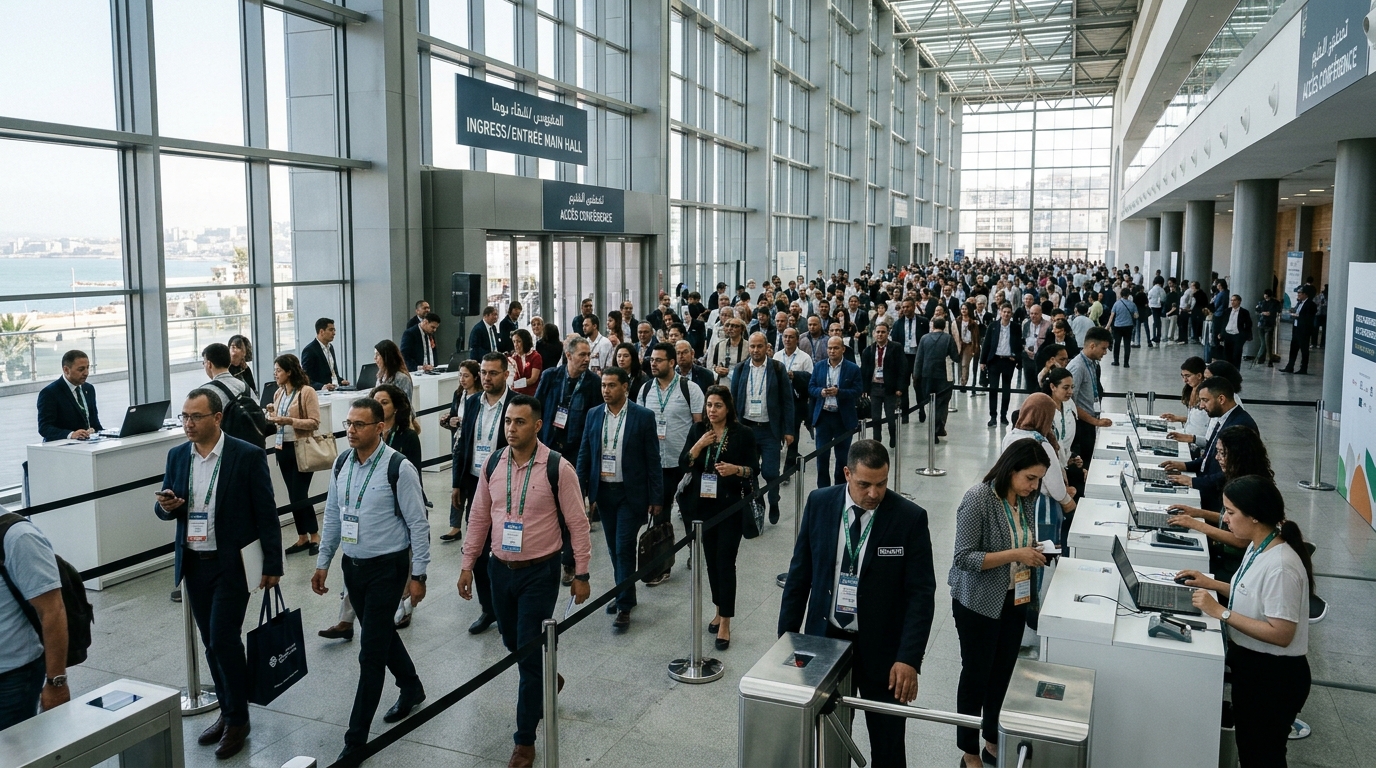
The single most dangerous moment for crowd crushing at any conference occurs between 08:30 AM and 09:15 AM, when 70% of the entire attendance arrives simultaneously before the opening keynote. Calculate your entry throughput mathematically:
- Bag & Security Screening: A standard walkthrough metal detector and bag X-ray processes approximately 10 to 12 persons per minute per inspection lane.
- Badge Scanning & Issuance: Digital QR code scanning on tablets or thermal badge print stations processes 15 to 20 persons per minute per lane.
- Lane Allocation Rule: If 1,200 delegates are expected within a 45-minute arrival window (27 arrivals per minute), you require a minimum of 3 dedicated security lanes and 4 registration counters operating at full capacity to prevent queues from spilling into outdoor streets or hotel lobbies.
2. Coordination with Municipal & Civil Authorities
In Algeria and international jurisdictions, hosting large-scale corporate summits requires formal administrative clearances well in advance of opening day:
- Wilaya & Security Clearances: Submit your comprehensive event security filing (including expected attendee counts, VIP guest rosters, and event blueprints) to the local Wilaya authorities and national security services (DGSN) at least 30 days prior.
- Civil Protection (Protection Civile) Inspection: Schedule an on-site walkthrough with Protection Civile officers to inspect illuminated emergency exit signage, emergency panic bars on doors, functioning fire hose cabinets, and wide aisle clearances between exhibition booths.
- Dedicated Medical First-Aid Post: High-capacity gatherings exceeding 1,000 attendees should contract a dedicated on-site ambulance team and registered physician stationed in a clearly signposted First Aid room with direct vehicular access to emergency roads.
"Crowd management is 80% spatial engineering and 20% staff response. When aisles are wide and signage is unmistakably clear, panic is designed out of the environment."
3. Exhibition Hall Aisle Width & Egress Zoning
Over-maximizing exhibitor booth space at the expense of circulation aisles is a dangerous operational gamble:
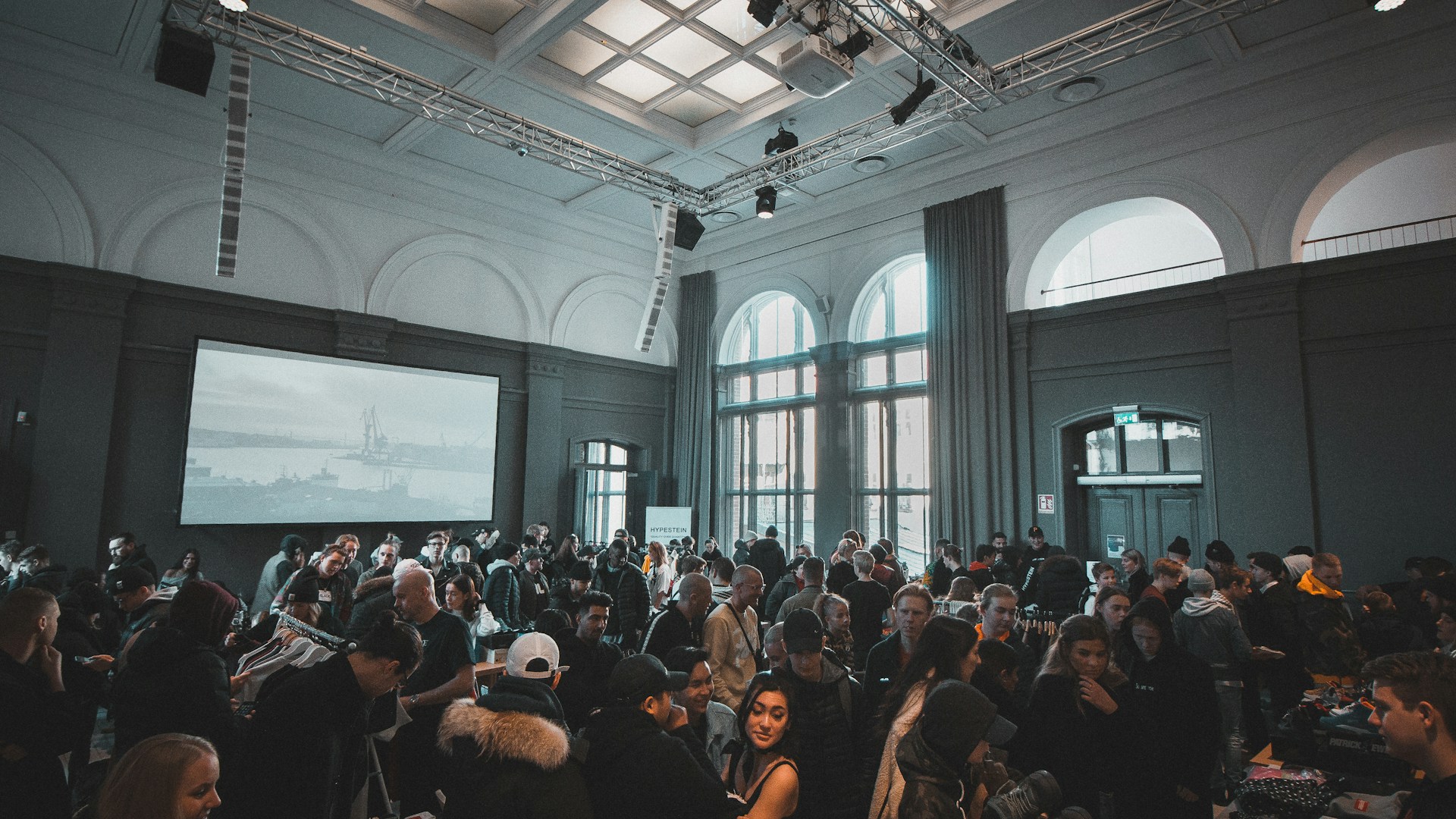
- Primary Arterial Aisles: Maintain a minimum clear width of 3.5 to 4.5 meters along the main central concourses connecting expo entrances, auditorium doors, and catering zones.
- Secondary Breakout Aisles: Secondary aisles must never measure less than 2.5 meters wide, allowing two-way delegate traffic to flow smoothly even when crowds stop to view a booth demonstration.
- Zero Obstruction Policy: Enforce strict rules preventing exhibitors from placing pop-up banners, literature racks, or extension cords past their designated carpet boundaries into shared public corridors.
4. Emergency Evacuation Protocols & Staff Training
In an unexpected emergency, attendees instinctively try to exit through the same door they entered. Your safety protocol must actively redirect flow:
- Zone Marshals: Assign designated staff members as Floor Marshals equipped with high-visibility vests and two-way walkie-talkies. In an evacuation, each marshal is responsible for clearing a specific sector and directing attendees toward alternative perimeter emergency exits.
- Pre-Recorded Stage Announcements: Prepare standardized bilingual audio announcements (French and Arabic) stored on the master AV soundboard, ready to broadcast calm, clear evacuation instructions instantly over the entire venue PA system.
- Assembly Points (Points de Rassemblement): Verify that outdoor assembly areas are clear of delivery trucks, VIP vehicles, and ongoing construction, providing safe muster space away from the main building facade.
Conclusion
Proactive security planning safeguards your attendees' physical well-being, protects organizational liability, and builds trust with corporate enterprise delegations. By respecting circulation mathematics and establishing rigorous emergency protocols, organizers guarantee a safe, welcoming, and resilient summit environment.