The Evolution of the Event Badge: From Paper Card to Smart Credential
For decades, the event badge was nothing more than a folded cardstock insert inside a clear PVC pouch—useful only as a visual nametag. However, as trade expos and mega-conferences scale to thousands of simultaneous attendees, organizers are transforming credentials into active, connected smart devices using **RFID (Radio-Frequency Identification)** and **NFC (Near-Field Communication)** microchips.
When evaluated properly, contactless smart badges can dramatically accelerate turnstile ingress, eliminate physical cash handling at catering counters, and capture granular attendee foot-traffic intelligence that boosts exhibitor renewal rates.
Upgrade Your Event Gate Operations with Instant QR & Chip Scanners
Eventzone integrates seamlessly with both high-speed optical scanning terminals and smart chip readers, validating delegate access in 300 milliseconds with full offline fallback.
Test Access Control Hardware1. Technology Comparison: Optical QR vs. NFC vs. UHF RFID
Choosing the right hardware architecture depends on your summit's scale, budget, and operational goals:
- Optical QR Codes (Eventzone Native): The most cost-effective and flexible solution. Zero specialized card manufacturing costs; credentials can be delivered instantly via smartphone screens or printed onto lightweight paper stock. Scanning requires intentional line-of-sight optical alignment (approx. 0.5 to 1.5 seconds per scan).
- NFC (Near-Field Communication, 13.56 MHz): High-security short-range chip (tap within 2 to 4 cm). Ideal for tap-and-go access turnstiles, lead retrieval scanning by exhibitors, and cashless dining wallets. Can be embedded directly inside reusable laminated plastic badges or fabric wristbands.
- UHF RFID (Ultra-High Frequency, 860–960 MHz): Long-range passive scanning (reads up to 3 to 5 meters through overhead portals). Enables hands-free passive tracking—attendees simply walk through portal arches without breaking stride, automatically recording session attendance and room dwell times.
2. Turnstile Ingress Velocity: Tap-and-Go vs. Optical Scan
At high-volume morning registration, every fraction of a second matters:
- Passive RFID Arches: Up to 1,200 attendees/hour per lane. Delegates walk through naturally without lifting a hand. Best suited for high-density public conventions where stopping every person creates massive outdoor crushes.
- NFC Tap Turnstiles: 600 to 800 attendees/hour per lane. A swift 1-second badge tap unlocks a physical turnstile gate with immediate green/red LED feedback.
- Optical QR Scanners: 300 to 450 attendees/hour per lane. Requires the attendee to orient their smartphone screen or paper lanyard toward a camera lens.
"Replacing cash and voucher tickets with contactless badge taps increases lunchtime catering throughput by 65%, completely eliminating line stagnation at food courts."
3. Closed-Loop Cashless Payments for Expo Catering
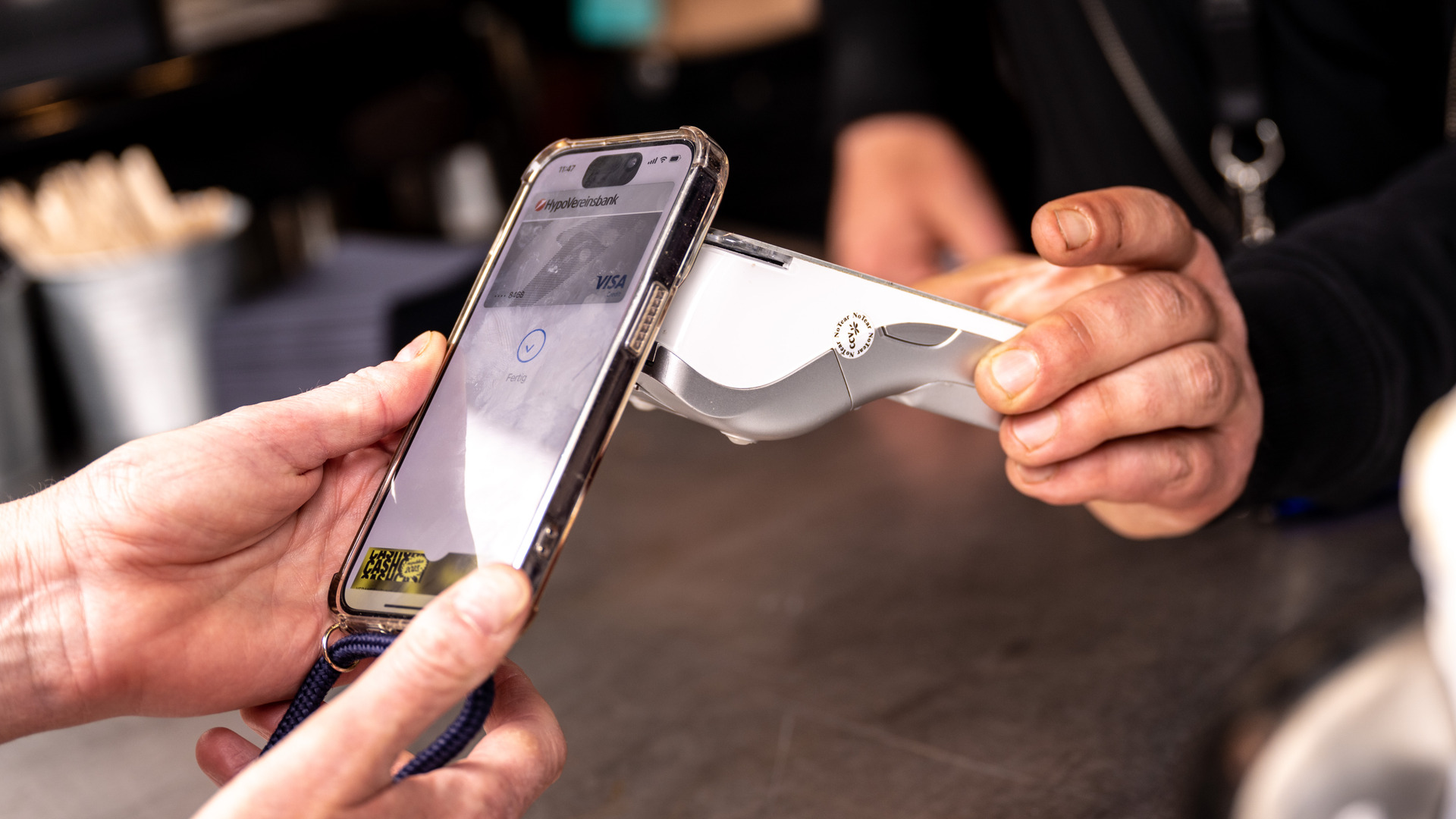
Handling physical currency at festival food trucks, expo coffee corners, or official merchandise desks creates severe accounting risks, staff theft exposure, and slow change-making latency. A smart badge serves as a secure closed-loop digital wallet:
- Attendees pre-load funds onto their badge balance during online registration or at automated kiosk top-up stations using EDAHABIA or CIB cards.
- Catering staff tap the attendee's badge against an NFC mobile terminal to deduct exact meal prices in under 2 seconds.
- All catering revenue aggregates instantly into the organizer's master dashboard, providing clean, reconciled sales data and automated vendor revenue splits.
4. Spatial Analytics & Real-Time Floor Heatmaps
With long-range UHF RFID antennas positioned throughout the exhibition hall, event organizers unlock powerful spatial analytics:
- Real-Time Density Heatmaps: Identify congested aisles or dead zones in real time, allowing floor managers to re-route foot traffic using mobile app alerts.
- Session Dwell Time Verification: Accurately measure which keynote panels held delegate attention for 45 minutes versus sessions where attendees walked out after 10 minutes.
- Audited Sponsor Footfall Reports: Provide high-tier exhibitors with verifiable data showing exactly how many delegates walked past their booth sector during peak hours.
5. The Cost-Benefit Tradeoff
RFID/NFC chip badges incur higher per-unit hardware costs (typically $1.20 to $2.50 per smart credential plus antenna rental) compared to direct thermal paper badges ($0.15 to $0.35 per badge). For summits under 500 delegates, high-speed optical QR codes remain the undisputed champion of cost-efficiency. For multi-day expos exceeding 2,500 attendees with complex catering and zoned security, smart chip credentials quickly pay for themselves in operational speed and sponsor data monetization.
Conclusion
Smart badges bridge the physical event environment with digital platform intelligence. By selecting the right credential architecture for your venue scale, organizers ensure rapid access, effortless transactions, and rich spatial data that elevates future event editions.