Why Multilingual Clarity Defines International Summits
Across Algeria, North Africa, and international business hubs, major corporate conferences, ministerial forums, and technical expos routinely bring together speakers and delegates fluent in Arabic, French, and English. Asking an international keynote speaker to slow down—or relying on slow, momentum-killing consecutive translation—cuts effective stage time in half and fractures audience focus.
Professional Simultaneous Interpretation (SI) allows every speaker to present naturally in their strongest language while every delegate listens seamlessly in real time. Achieving broadcast-grade translation, however, requires disciplined acoustic engineering, hardware selection, and strict foyer distribution logistics.
Forecast Exact Translation Headset Demand Before Doors Open
Eventzone lets organizers add custom registration questions—capturing exact Arabic, French, and English audio receiver requirements during ticket checkout.
Set Up Registration Forms1. Soundproof Interpreter Booths & Sightline Placement
Never place simultaneous interpreters at an open table in the corner of the hall or hidden backstage without direct stage visibility:
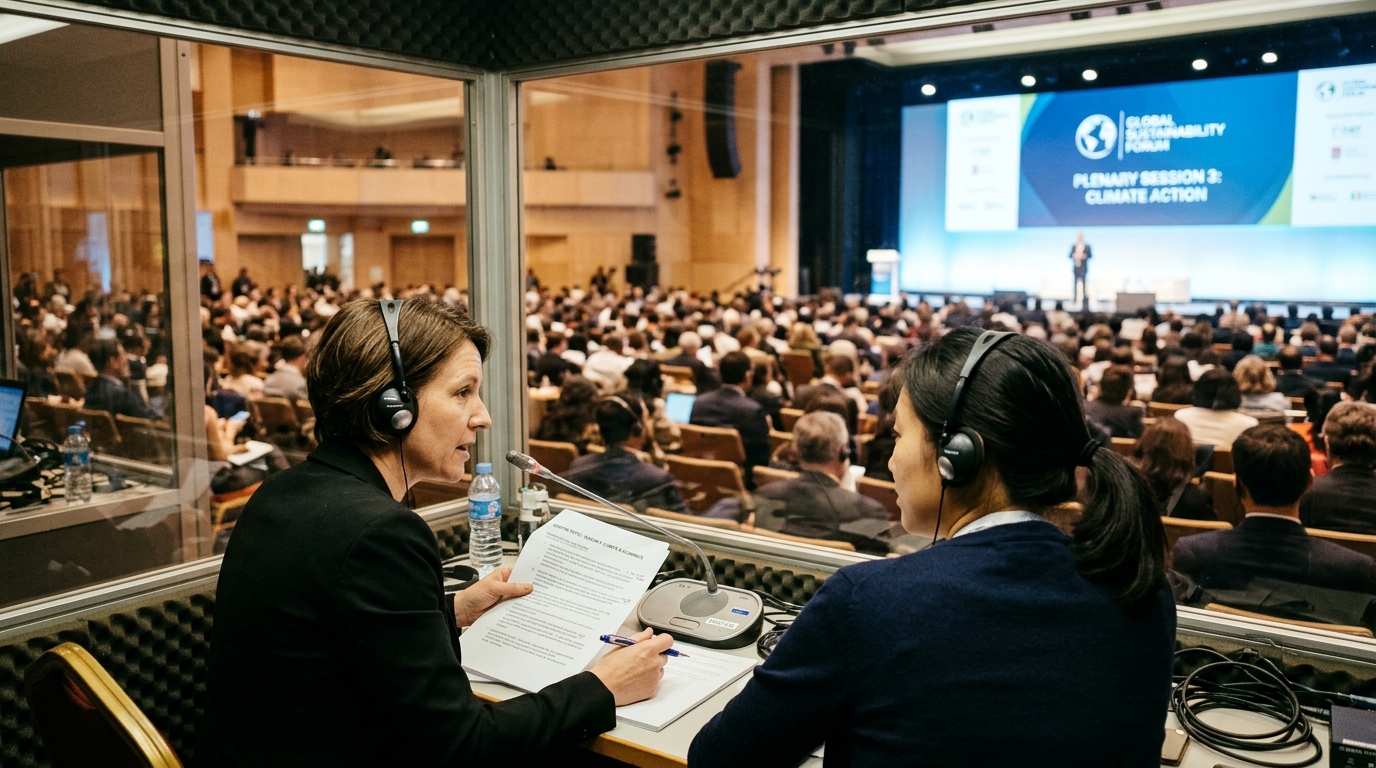
- ISO 4043 Acoustic Booths: Always specify full-encapsulation soundproof booths (one booth per target language pair, typically housing two interpreters per booth). Double-pane acoustic glass prevents stage loudspeaker bleed into interpreter microphones and keeps booth audio from leaking onto nearby delegates.
- Unobstructed Stage Sightlines: Position booths at the rear or elevated balcony of the plenary hall with a clear, unobstructed line of sight to the speaker's lectern and main presentation screen. Interpreters rely heavily on body language, facial cues, and slide text to anticipate sentence endings.
- Dedicated Confidence Monitors: If architectural pillars partially block sightlines, install a zero-latency SDI video feed monitor inside each booth displaying the live stage camera and slide deck simultaneously.
2. Infrared (IR) vs. Radio Frequency (RF) Transmission
Choosing the right wireless distribution technology prevents interference and security leaks:
- Digital Infrared (IR) Systems (Gold Standard for Plenaries): Infrared light signals cannot penetrate solid walls. This guarantees two critical advantages: adjacent breakout rooms will never experience cross-channel audio bleed, and confidential ministerial or corporate discussions remain physically contained inside the hall. Note that IR radiators must be mounted high with clear coverage and can suffer interference from direct intense sunlight through glass walls.
- Digital RF / UHF Systems: Ideal for outdoor pavilions, sunlit glass atriums, or multi-zone expo floor tours where delegates walk between booths without line-of-sight to ceiling emitters. Ensure your AV vendor performs an RF spectrum scan on-site to avoid local wireless microphone interference.
"Budgeting for two certified conference interpreters per language booth is non-negotiable: cognitive fatigue degrades translation accuracy sharply after 25 minutes of continuous speaking."
3. Headset Distribution & Loss-Prevention Logistics
Each digital receiver unit costs between 15,000 and 40,000 DZD to replace if lost or accidentally taken home in a delegate's briefcase. Implement a fast, zero-friction loan desk workflow:
- Dedicated Pickup Counter: Position the interpretation headset desk immediately inside the main auditorium entrance—separate from the primary badge registration desk so foyer lines never stall.
- QR Badge Scan or ID Exchange: Scan the delegate's Eventzone QR badge (or hold a physical business card / ID badge token) linked to the numbered receiver unit, logging check-out and return cleanly without handling cash deposits.
- Sanitization & Earpiece Covers: Supply fresh disposable foam ear-pad covers or single-ear headsets with sealed hygiene wipes, and inspect battery charge indicators on every unit during the midday lunch break.
4. Briefing Interpreters 7 Days in Advance
Even world-class interpreters will stumble over proprietary industry acronyms, sector legislation, or company names if they hear them for the first time live on stage. Seven days before opening morning, send your interpretation team:
- Finalized keynote slide decks and panel discussion outlines.
- A bilingual glossary of specialized technical terms (e.g., hydrocarbons, fintech regulations, pharmaceutical compliance, AI terminology).
- Correct pronunciation guides for VIP speakers, ministry officials, and sponsor executives.
Conclusion
When multilingual audio flows effortlessly, language barriers disappear completely from the auditorium. By combining ISO-compliant booth placement, secure wireless transmission, organized headset tracking, and thorough interpreter preparation, organizers elevate regional conferences to truly international standards.